linux

comparison of compression methods for database dumps

I like to have automated daily database backups set up on my servers - for those hosting relatively small sites, the database dumps can usually be compressed down small enough to be sent as an e-mail attachment by the cron script which does the database dump. This is a really simple and cost-effective way of having offsite backups which provide daily snapshots of sites which are easy to access if anything goes wrong.

installing subversion and vim on a shared host

I haven't used shared hosting for quite a while, but for a few sites I've worked on recently an account on a shared host seemed the best choice in terms of how much disk space and bandwidth they'd get for a very small cost.

One obvious problem with shared hosting though is the lack of control; I was careful to choose a package which provided up-to-date versions of apache, php and mysql but subversion was not installed, and the version of vim on the server didn't have support for some basic things like syntax highlighting.

installing PECL upload progress on ubuntu server

Some of Drupal's CCK modules such as filefield and imagefield have support for a neat Upload Progress meter.

You may have seen a message in the status report of your Drupal site saying something like... "Upload progress not enabled - Your server is capable of displaying file upload progress, but does not have the required libraries. It is recommended to install the PECL uploadprogress library (prefered) or to install APC."

handy bash, vim and screen configurations

Here are some useful configurations for bash, vim and screen. Every time I have to set myself up on a new machine, I end up copying these files from a machine where I've already got an account. I thought perhaps it'd be easier to put the settings on a webpage. If anyone else finds these useful, that's a bonus.

~/.bashrc

(snippet, not the whole file)

one liner using xargs to automate a repetitive task

This article illustrates using the *nix commandline to chain several commands together to automate a repetitive task - in this case preparing some drupal modules into neatly labelled directories.

The example here covers quite a few different useful commands and commandline techniques, which we can't really hope to cover in exhaustive detail; there's plenty of good documentation out there for everthing we mention.

running herbert under wine on linux

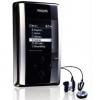
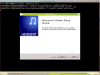
After a while using hddtool to manage our Philips HDD120 audio player, I discovered herbert. This is an open-source application written in C#. It's usually run in windows using the .NET framework. I wanted to be able to manage the player from linux - I've now found a way to do this, and I'll explain how.

Syndicate content